

Structural Cohesion: The Key to Operational Sustainability
Heavy equipment such as trucks and tractors is vital to many critical sectors, driving the development of industries including agriculture, mining, construction, and logistics.
A key objective is to minimize the environmental footprint of heavy equipment while ensuring financial viability.
While alternative energy sources will have a significant impact (as discussed in another Henkel blog post), the focus on sustainability must extend across the entire value chain, from material procurement through manufacturing, operation, maintenance, and end-of-life disposal. As a 2020 article on automotive manufacturing on environment.co noted, these elements do not always receive the same level of attention as powertrain systems.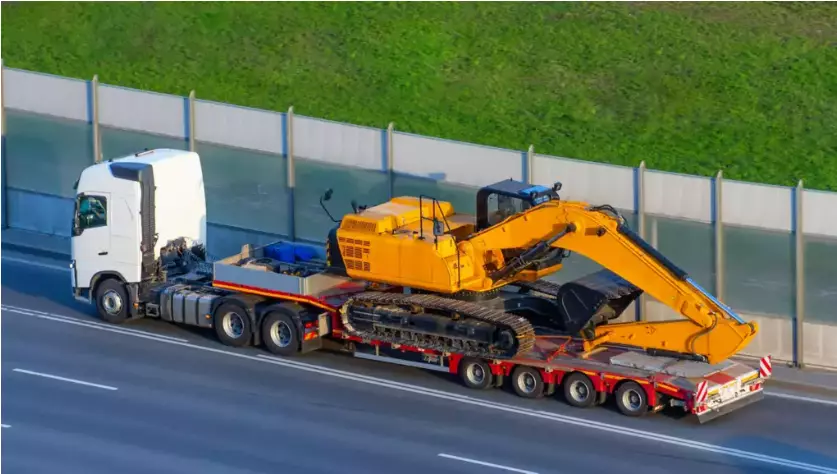
"Because the manufacturing phase is out of direct sight for consumers, we often forget its environmental impact."
Opportunities to improve sustainability exist throughout the heavy equipment value chain. Here, we explore how structural bonding can replace welding and mechanical fastening to create a more sustainable manufacturing process: one that is more efficient, less reliant on skilled labor, generates lower carbon dioxide emissions, and delivers lighter, easier-to-maintain end products.
Structural Bonding and Sustainability
Like other manufacturing industries, heavy equipment production has historically relied heavily on welds, bolts, or rivets to join steel or aluminum components. The use of adhesives and non-metallic materials has been largely limited to non-structural areas, mostly due to constraints related to strength and durability.
Advancements in materials and bonding technology have increasingly provided sustainable alternatives to welding or mechanical fastening, offering the required joint strength and toughness while delivering significant environmental and cost benefits.
Structural bonding offers an alternative to welding or mechanical fastening with the following advantages
- Enables lightweighting – As highlighted in a 2022 Henkel blog post on lightweighting in automotive manufacturing, replacing heavier rivets and welds with 2.2 pounds of adhesive can reduce vehicle weight by 55 pounds without compromising structural integrity or safety.
Heavy equipment spends a large portion of its service life in transit. This lightweighting delivers major benefits for hauling operations while directly reducing fuel consumption.
An April 2022 article in the *American Journal of Transportation* explored the numerous benefits of lightweighting for commercial vehicles in detail.
- Reduces carbon dioxide emissions– Using structural adhesives instead of mechanical fasteners or welds streamlines production processes and reduces the volume of inventory and materials that need to be sourced and stored. This can significantly lower carbon dioxide emissions from production and transportation.
- Minimizes reliance on scarce skilled labor – A 2022 report on manufacturingtomorrow.com stated that the American Welding Society estimates a shortage of 400,000 workers by 2024. Using structural adhesives to replace welds where feasible reduces dependence on skilled labor and enables easier automation of operations.
- Facilitates automated process monitoring and control – The automated application of structural adhesives allows for continuous monitoring, measurement, control, and optimization of parameters such as adhesive volume, chemical composition, and temperature. This demonstrates how intelligent monitoring and management can transform the efficiency of bonding processes and, in turn, their sustainability.
- Expands the range of manufacturing material options – Alternatives to aluminum and steel are playing an increasingly important role in automotive manufacturing due to their lighter weight and lower environmental footprint. A 2020 study by marketsandmarkets.com projected that the global automotive composites market will nearly double from $7.2 billion in 2020 to $14.3 billion by 2028. Structural bonding is compatible with a wide range of substrates, providing greater flexibility in material selection for manufacturing.
Beyond Bonding
Chemical solutions for heavy equipment extend far beyond structural bonding. The use of advanced chemical solutions in key processes such as seam sealing and gasket technology delivers benefits in environmental performance, efficiency, and cost. For example, chemical gaskets can drastically reduce production, inventory, and MRO (Maintenance, Repair, and Operations) expenses associated with pre-cut gaskets, offering a single globally accessible solution that perfectly replaces multiple custom components.
How Henkel Creates Value
Henkel’s position as a global market leader in material solutions, combined with its relentless pursuit of innovation and close collaboration with original equipment manufacturers (OEMs) and operators, makes us an ideal partner for driving holistic sustainability across the heavy equipment value chain.
For more than 140 years, Henkel’s material technologies have delivered outstanding results through brand strength and technological excellence. We offer market-leading solutions and deep expertise across the full range of materials required for heavy equipment production:
- Adhesives
- Sealants
- Gap pads and fillers
- Potting compounds
- Gasket technologies
- Thermal interface materials
- Magnet bonding
- Printed circuit board materials
Previous: Do you know the water absorption of epoxy resin adhesive?
Next: No More